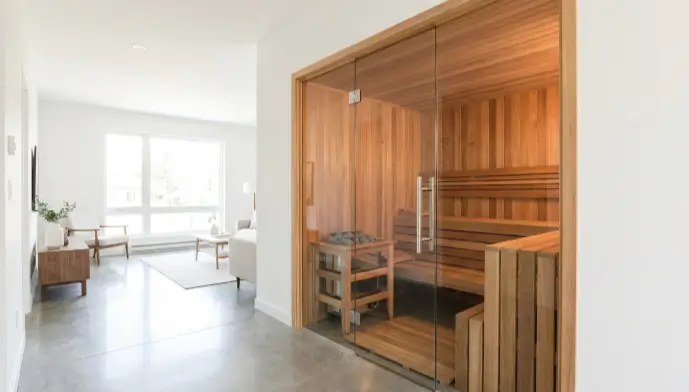

The unit itself is only part of the bill. A three- to four-person indoor traditional cabin typically totals $5,000 to $9,000 once you add a dedicated electrical circuit and any floor or moisture-barrier prep the room needs, while a compact plug-in infrared cabin can land closer to $2,500 to $4,000 all-in with little to no electrical work. Buyers who compare only the cabin’s list price against a competitor’s list price are missing the line items that usually decide the real number.
What Does the Cabin Itself Cost?
A two-person infrared cabin built from cedar or heat-treated hemlock typically lists between $2,000 and $3,500. A three- to four-person traditional electric cabin runs $4,000 to $7,500 depending on wood species, heater wattage, and glass area. Larger five- to six-person cabins with premium wood and a larger heater push past $8,000 before anything else is added. These prices vary meaningfully by construction quality: tongue-and-groove panel joinery with no exposed interior fasteners, a named wood species with stated kiln-drying, and a heater with a published two-year-plus warranty tend to sit at the higher end of a given size class, and generally hold up longer than a cheaper import with vague specs.
What Does the Electrical Work Add?
This is the cost that surprises the most first-time buyers because it rarely appears on the sauna’s own price tag. Most traditional electric heaters above 6 kilowatts require a dedicated 240-volt circuit, and running one costs $500 to $1,500 or more depending on distance from the electrical panel and whether the panel has spare capacity for a new breaker. A basement install close to the panel is usually on the cheaper end of that range; a converted upstairs room far from the panel can push well past it. Infrared cabins that plug into a standard 120-volt, 20-amp outlet largely avoid this cost, which is a real part of why they run cheaper all-in despite a similar unit price to a small traditional cabin.
What Does the Room Itself Need Before Installation?
Most manufacturers recommend a water-resistant floor surface under and around the cabin, since condensation and occasional water from bathers stepping in and out will find any weak spot in flooring over time. If the cabin backs against an exterior wall or sits in a basement with variable humidity, a vapor barrier behind the cabin panels is worth the modest added cost to keep moisture from migrating into surrounding framing over years of regular use. None of this is expensive in isolation, often a few hundred dollars in materials and a weekend of labor, but it is easy to skip when budgeting only for the cabin and heater, and skipping it is how a sauna room develops a mildew problem within a few winters.
What Do You Actually Get for That Total Cost?
Beyond the relaxation most owners cite first, a body of independent review literature has looked at what regular sauna bathing is associated with over years of use. A 2018 review in Mayo Clinic Proceedings summarized cardiovascular and broader health associations reported across multiple studies of Finnish-style sauna users, and a 2023 follow-up review in the same journal examined whether combining regular sauna bathing with other healthy lifestyle habits was linked to additional benefit beyond either alone. A systematic review in Evidence-Based Complementary and Alternative Medicine reached broadly consistent conclusions about regular dry sauna bathing. These are associations built mainly on long-running Finnish cohorts, not a guarantee for any one household, and they are one input among several, alongside routine and simple relaxation, that buyers reasonably weigh against a $5,000 to $9,000 outlay.
How Should a Buyer Compare Total Cost Across Brands?
Because unit price alone hides so much, the more useful comparison is total installed cost against stated specs: heater wattage, wood species and drying method, panel construction, and warranty length, all matched against your own room’s distance from the electrical panel and existing floor condition. Two cabins priced within a few hundred dollars of each other can differ by a full kilowatt of heater output or an entire warranty tier, which matters far more over a decade of use than the sticker price difference. Shoppers building out a full budget, from unit through electrical and floor prep, can review sizing and pricing across the SweatDecks catalog alongside other established retailers such as Almost Heaven and Sunlighten to get a realistic sense of where a given spec level typically lands on price.
See also: How to Tackle Floods?
What Ongoing Costs Should Be Budgeted Beyond the Initial Install?
The purchase price and installation are a one-time outlay, but a few smaller ongoing costs are worth budgeting for as well. Electricity for regular use, once the fixed circuit is in place, typically adds $10 to $35 a month depending on session frequency and heater size. Heater stones need periodic inspection and occasional replacement, usually every one to three years, at a modest parts cost. Door gaskets and bench boards are wear items on any cabin used several times a week and should be budgeted as an occasional line item rather than an unexpected expense a few years in. None of these ongoing costs are large individually, but together they are worth factoring into a realistic total cost of ownership rather than treating the installed price as the final number.
Is It Worth Getting Quotes Before Committing to a Room Plan?
Yes, and doing it in the right order saves money. Get a rough electrician’s estimate for the circuit run before finalizing which cabin and heater size to buy, since a heater one size down might mean the difference between a simple breaker addition and a panel upgrade. Similarly, confirm flooring condition and any moisture-barrier need before the cabin arrives rather than after, since it is far easier to prep a room ahead of installation than to pull a fully assembled cabin back apart later.
Frequently Asked Questions
What is the all-in cost of a mid-size indoor sauna? A three- to four-person traditional cabin typically totals $5,000 to $9,000 with electrical and floor prep included, while a compact plug-in infrared cabin can land closer to $2,500 to $4,000 all-in.
Is the electrical work usually the biggest hidden cost? For traditional electric cabins, often yes. A dedicated 240-volt circuit can run $500 to $1,500 or more depending on distance from the panel, and it rarely shows up on the sauna’s own price tag.
Does an indoor sauna need floor protection or a moisture barrier? Most manufacturers recommend a water-resistant floor and, for exterior-wall or basement installs, a vapor barrier behind the cabin panels to prevent long-term moisture migration.
Are the reported health associations worth the added cost for most buyers? That is personal, but reviewed studies do link regular sauna bathing to lower cardiovascular event rates in Finnish cohorts, an association some buyers weigh alongside the routine and relaxation value.
References
- Cardiovascular and Other Health Benefits of Sauna Bathing: A Review of the Evidence, Mayo Clinic Proceedings, 2018
- Does the Combination of Finnish Sauna Bathing and Other Lifestyle Factors Confer Additional Health Benefits? A Review of the Evidence, Mayo Clinic Proceedings, 2023
- Clinical Effects of Regular Dry Sauna Bathing: A Systematic Review, Evidence-Based Complementary and Alternative Medicine, 2018
By Owen Bradshaw

 By
By