Business Intelligence and Strategic Forecasting: 120829, 120921493, 418927502, 610876091, 604373718, 613967754

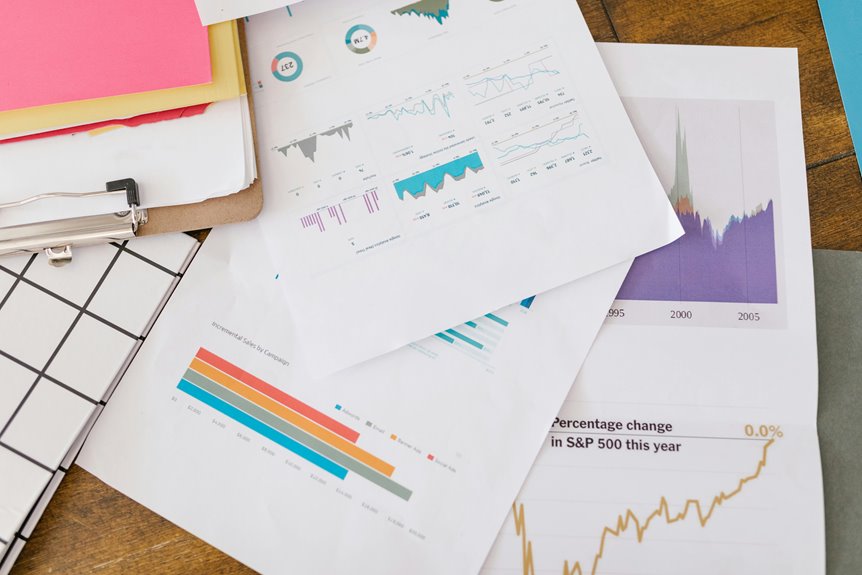
Business intelligence (BI) and strategic forecasting are integral to modern organizational success. These processes rely on data-driven methodologies to enhance decision-making and operational efficiency. By employing predictive analytics, companies can identify trends and anticipate shifts in market dynamics. However, many organizations struggle to effectively integrate these tools. Understanding the key concepts and benefits of BI, alongside emerging trends, may shed light on how to overcome these challenges and improve performance metrics.
Understanding Business Intelligence: Key Concepts and Benefits
Business intelligence (BI) serves as a pivotal framework for organizations seeking to enhance decision-making processes through data-driven insights.
By leveraging real-time insights, companies can perform market analysis and customer segmentation, facilitating data-driven decisions that yield competitive advantages.
Furthermore, BI enhances operational efficiency, enabling effective risk assessment and the monitoring of performance metrics, ultimately driving organizational success in dynamic environments.
The Role of Data in Strategic Forecasting
Although strategic forecasting relies on various methods and approaches, data remains the cornerstone that underpins accurate predictions and informed decision-making.
Key aspects of data’s role in this context include:
- Data accuracy enhances reliability
- Effective forecasting techniques leverage insights
- Predictive analytics drives foresight
- Data integration is crucial for coherence
- Trend analysis informs risk assessment and performance metrics
These elements collectively facilitate superior decision-making.
Methodologies for Effective Business Intelligence
Effective business intelligence methodologies provide a framework for organizations to harness data-driven insights and improve decision-making processes.
By emphasizing data integration and robust data governance, these methodologies enhance decision support and performance measurement.
Analytical tools facilitate user adoption and promote business alignment, ultimately creating a competitive advantage.
Such structured approaches empower organizations to leverage insights for strategic growth and informed decisions.
Analyzing Trends With Advanced Analytics
Analyzing trends through advanced analytics involves employing data visualization techniques and predictive modeling applications to uncover actionable insights.
Data visualization transforms complex datasets into comprehensible graphics, facilitating quicker decision-making.
Meanwhile, predictive modeling leverages historical data to forecast future outcomes, enhancing strategic planning and operational efficiency.
Data Visualization Techniques
Clarity in data visualization techniques is crucial for understanding complex trends within business intelligence. Effective methods enable organizations to leverage data storytelling and interactive dashboards, facilitating informed decision-making.
Key techniques include:
- Heat maps for pattern recognition
- Line charts for trend analysis
- Bar graphs for categorical comparisons
- Pie charts for proportional data representation
- Infographics for engaging storytelling
These tools enhance insights and drive strategic initiatives.
Predictive Modeling Applications
While organizations continuously seek to enhance their decision-making processes, predictive modeling applications have emerged as powerful tools for analyzing trends through advanced analytics.
By employing predictive analytics techniques and integrating machine learning, businesses can uncover insights that drive strategic initiatives.
These applications facilitate data-driven forecasting, enabling organizations to anticipate market shifts and optimize resource allocation, ultimately fostering a culture of informed decision-making.
Case Studies: Success Stories in BI and Forecasting
Successful implementations of Business Intelligence (BI) and strategic forecasting illustrate the transformative power of data-driven decision-making in various industries.
Real-world applications demonstrate significant benefits, including:
- Enhanced operational efficiency
- Improved customer insights
- Streamlined supply chain management
- Accelerated decision-making processes
- Increased revenue growth
These case studies highlight the effectiveness of BI in fostering adaptability and innovation within organizations, ultimately empowering them to achieve strategic goals.
Future Trends in Business Intelligence and Strategic Planning
As organizations increasingly prioritize data-driven strategies, emerging trends in Business Intelligence (BI) and strategic planning are reshaping how decisions are made across sectors. Key trends include the integration of emerging technologies, real-time insights, and automation impact, fostering organizational agility. To navigate market disruptions and maintain a competitive advantage, businesses must adopt robust decision-making frameworks while adhering to data ethics.
| Trend | Impact on BI | Focus Area |
|---|---|---|
| Emerging Technologies | Enhanced data processing | Real-time Insights |
| Market Disruptions | Need for adaptability | Organizational Agility |
| Automation Impact | Streamlined operations | Decision Making |
| Competitive Advantage | Informed strategic choices | Data Ethics |
| Real-Time Insights | Timely decision-making | Risk Mitigation |
Conclusion
In the intricate dance of data and decision-making, business intelligence and strategic forecasting serve as the compass guiding organizations through turbulent market waters. By embracing advanced analytics and predictive methodologies, companies can not only navigate uncertainty but also seize opportunities that lie ahead. As the horizon of technology continues to expand, those who harness these insights will not merely survive but thrive, transforming challenges into stepping stones for sustainable growth and innovation.